Your site does not pause when the internet does
Industrial sites run on their own rhythm. Production does not ask the internet for permission. Forklifts still move, pedestrians still walk, and the safety system still has to work, regardless of whether a cloud service is reachable in that moment.
That sounds obvious. But a surprising amount of industrial vision tooling is not built to hold up to it. Architectures that depend on cloud inference, cloud licensing, or cloud configuration do not degrade gracefully. They stop. And in a safety context, a system that stops silently when the internet hiccups is a system that should not be deployed as safety.
What offline-first actually means
Offline-first is not a feature you turn on. It is an architectural stance: everything safety-critical runs locally, by default, and the online path is a useful extension rather than a dependency. In practice that means:
- ✓Detection runs on local compute at the edge, not in a remote service.
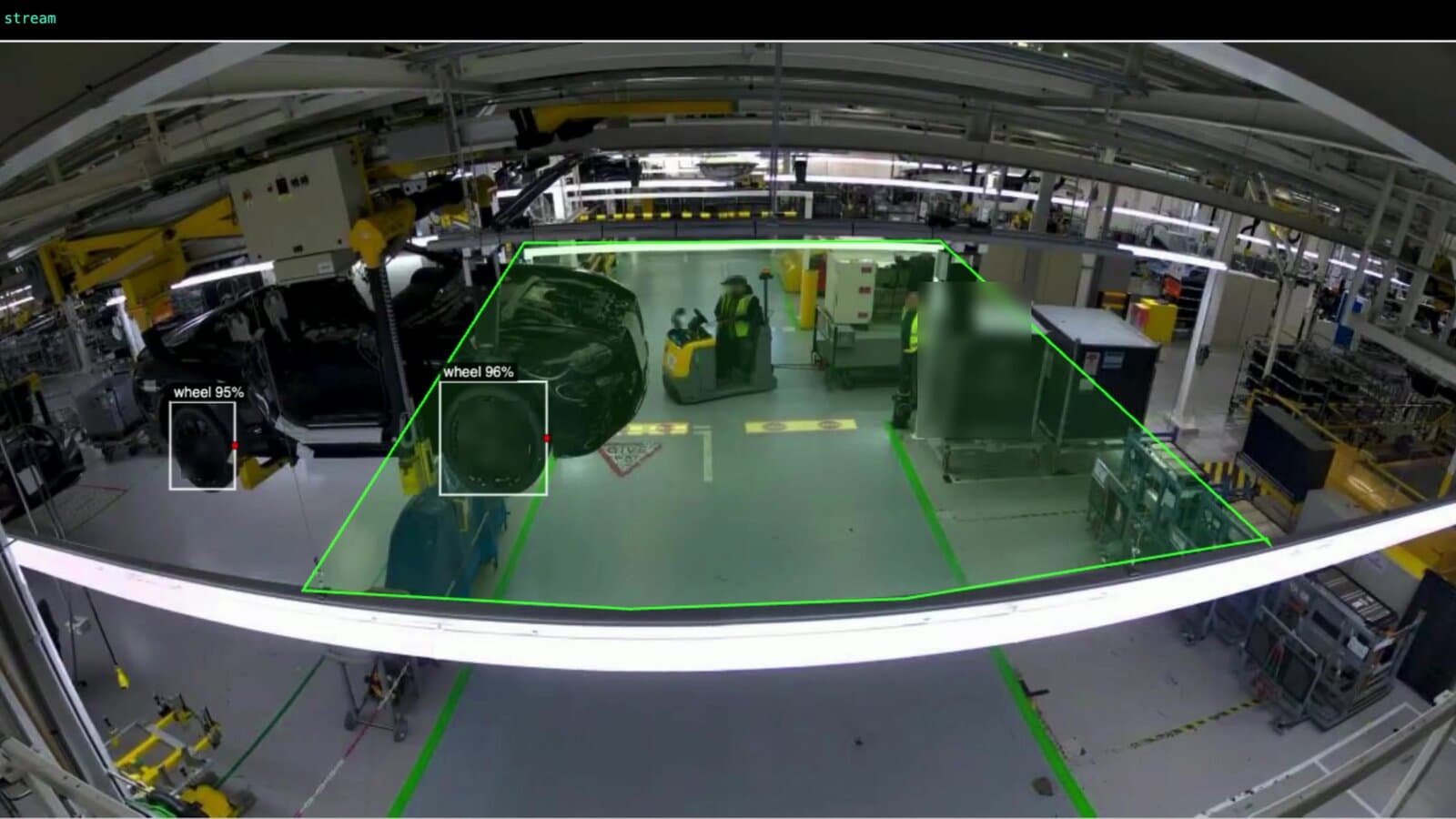
- ✓Rules and state live on the device, evaluated in real time against local detections.
- ✓Safety outputs are driven by local logic, wired through deterministic relay control.
- ✓Configuration persists locally, so the system boots up into its last known good state.
- ✓Event history is stored locally first, then synchronised to the cloud when available.
Every one of those is a design decision, not a bonus. Taken together they mean the system never has a connectivity dependency on its safety-critical path.
Why this matters beyond “the internet goes down sometimes”
It is easy to dismiss offline resilience as worst-case paranoia. It is not. The real reasons offline-first matters on an industrial site are more mundane, and more frequent:
- •Variable site connectivity: warehouses, yards, and remote plants often have flaky, congested, or partial network coverage.
- •Scheduled maintenance: cloud platforms update, and every minute of that should not be a minute of degraded safety.
- •Vendor risk: if a provider changes terms, prices, or availability, the safety system keeps working.
- •Air-gapped environments: some sites simply do not, and will not, allow outbound internet traffic.
- •Audit and assurance: a safety case is far cleaner when the system does not depend on an external service to function.
The role of the cloud in an offline-first system
Offline-first does not mean anti-cloud. The cloud still plays a meaningful role, just not on the safety-critical path. In a well-designed system, the cloud is where the nice-to-haves live:
- ✓Fleet management across multiple sites: configuration, updates, and operational oversight.
- ✓Long-horizon analytics: trends across sites, time-of-day patterns, and programme-level reporting.
- ✓Over-the-air updates: model and firmware rollouts when connectivity is available.
- ✓Cross-site evidence aggregation: an audit record that draws from multiple edge devices.
All of that is genuinely useful. None of it is safety-critical. If the link drops, the site loses oversight convenience, it does not lose safety.
Graceful degradation, not graceful collapse
The real test of an offline-first architecture is what happens when things do go wrong. The system should degrade gracefully: continue doing the safety-critical job, surface a clear warning locally, and reconnect and reconcile when the network is back. At no point should the user be told the system is unavailable because of a connectivity issue.
That is what we mean by production-grade. Not a happy-path demo with a fast connection, but a system that behaves predictably when the network misbehaves, and gives operators and engineers a clear view of what is happening.
Questions to ask a vendor
If you are specifying a vision-based safety system and deploying into an industrial environment, push on these:
- •If the internet connection is lost mid-shift, what stops working, and what keeps working?
- •Where does inference run, and how does that change if the cloud is unreachable?
- •Does configuration require network access, or does the device carry its state locally?
- •How are event records preserved and reconciled when the link returns?
- •Can the system be deployed air-gapped, if a site requires it?
Where we land on this
SAiFI is offline-first by design. Detection, rules, state, and action all live on the edge. The cloud adds oversight, updates, and cross-site intelligence, but it never sits on the safety-critical path. If you would like to see how that behaves in practice, our team will happily walk through a real deployment and show you what happens when the connection drops.